
A home inspection in Maryland usually costs about $350 to $500 for a typical house, and less for a condo. Published prices from Maryland inspectors start around $275 for a condo, as of October 2026. Add-ons like radon, a sewer scope and a termite inspection each add roughly $99 to $275. Size, age, distance and the add-ons you pick decide the final bill.
I’m a contractor as well as an agent, so I read a lot of inspection reports and price a lot of what’s in them. Here’s what the inspection costs, which extras are worth it, what shows up most, and how to use the report. If you’re just starting, our buyer page covers the whole process.
Typical inspection fees
Maryland doesn’t set inspection prices. These are three inspectors’ own published prices, checked in October 2026:
| Inspector | Base price | Radon | Sewer scope | Termite (WDI) |
|---|---|---|---|---|
| Associated Property Consultants (Baltimore area) | From $275 (condo), varies by size, age and location | Ask | Ask | Ask |
| InsideOut Property Inspection (Waldorf) | $350 up to 1,500 sq ft | +$150 | +$200 ($275 alone) | +$99 |
| Precision Home Inspections (Baltimore area) | From $499 up to 2,800 sq ft, thermal imaging included | $175 | Not listed | Not listed |
Two things push the price up: square footage and distance. Precision, for example, adds $25 for 2,801 to 3,500 square feet and charges travel past 40 miles. Older houses with crawl spaces and attics can also take longer.
A cheap inspection is rarely a bargain. The inspection is the one time before settlement that someone trained goes through every system in the house on your behalf. Hire on experience and sample reports, not on the lowest quote.
Add-on tests and when they matter
Radon
Radon is a radioactive gas from the soil. EPA’s Citizen’s Guide to Radon says EPA and the Surgeon General recommend testing all homes below the third floor, and EPA’s action level is 4 picocuries per liter. Montgomery County goes further. Since October 1, 2016, county law has required a single-family home, including townhomes, to be tested for radon before the sale closes, with the test done within a year before settlement, per Federal Title’s summary of the county law. Condos are excluded, and a few towns, including Rockville, have their own rules. If a test comes back high, a mitigation system is usually the fix. EPA says most homes can be fixed for about what other common home repairs cost.
Sewer scope
A camera run through the main drain from the house to the street. I’d do it on any house more than about 40 years old, any house with big trees in front, and every older city rowhome. In Baltimore City the owner is responsible for the line from the property line to the house. See buying a rowhome in Baltimore.
Termite or wood destroying insect (WDI) inspection
Some loans and lenders require one, and it’s one of the cheaper add-ons. Usually done by a licensed pest company, sometimes coordinated by your inspector.
Well and septic
Homes outside public water and sewer service run on a private well, a septic system or both. If the house has either, add a water quality test and a septic inspection by a septic contractor. A home inspector can’t see into the tank.
Mold, chimney, roof
Order these when the general inspection points you there, or when you can see a reason up front (an old chimney you plan to use, a roof you can’t walk).
The findings we see most
These are the items that show up again and again in Central Maryland reports. I’m not putting repair prices on them, because the range on each is too wide to be useful without seeing the house. Get written quotes from licensed contractors inside your inspection period.
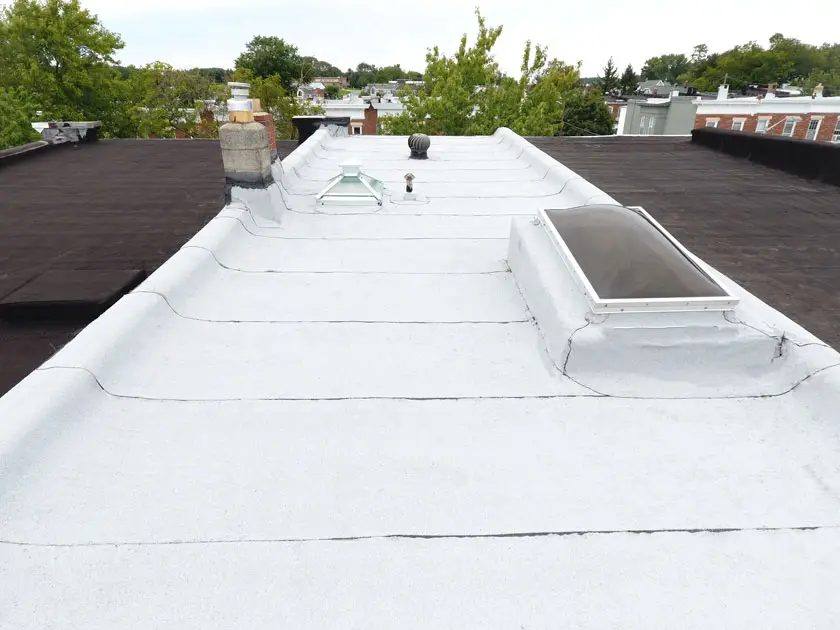
- Roof wear: Aging shingles, flashing at chimneys and walls, and on rowhomes, seams on the flat roof.
- Gutters and grading: Water pointed at the foundation. Often a small fix that prevents a big one.
- Basement moisture: Stains, efflorescence, a dead sump pump.
- Electrical: Double-tapped breakers, ungrounded outlets, missing GFCI protection near water, DIY wiring, old panels.
- Water heater and HVAC age: Units near the end of their typical life, missing service records, improper venting.
- Plumbing: Slow drains, old galvanized supply lines, leaks under sinks.
- Windows and doors: Failed seals, rot at sills, doors that don’t latch.
- Decks and stairs: Loose railings, missing ledger flashing, undersized footings.
- Attic: Thin insulation, bathroom fans venting into the attic, signs of past leaks.
- Smoke and CO alarms: Missing, old or in the wrong places.
Most reports list dozens of items. Sort them into three piles: safety issues, big-ticket items (roof, foundation, HVAC, sewer, electrical service), and maintenance. Only the first two piles usually belong in a negotiation.
How to use the report in negotiation
Your contract gives you a set number of days to inspect and respond. In that window you can usually:
- Ask the seller to repair specific items, ideally done by licensed contractors with receipts.
- Ask for a price reduction or a seller credit: Credits toward closing costs are capped by your loan program, so check with your lender.
- Accept the house as is.
- Walk away, if your contingency allows it and the findings are serious.
Keep the request short and focused on the big items. A 40-line request over cracked switch plates tends to get a “no” on everything. A licensed contractor’s written quote for a roof or sewer repair is hard to argue with.
If the house is being sold as is, the seller can still let you inspect. You just have less room to ask for repairs. Our as-is guide explains how that works in Maryland.
The appraisal is a separate step done for your lender, not for you. It checks value, not condition. See home appraisals in Maryland.
What a home inspection doesn’t cover
A general home inspection is visual. The inspector looks at what can be seen and reached safely on the day, and runs the systems that can be run. That leaves gaps worth knowing about:
- Inside the walls. Nobody opens drywall in a house you don’t own yet.
- The sewer line under the yard, unless you add a scope.
- The inside of a chimney flue, unless you add a chimney inspection.
- Septic tanks and wells, which need their own specialists.
- Code compliance. Inspectors report defects, not whether every past project met code. Permits answer that question.
- Cosmetic items, and usually anything blocked by furniture or storage.
Read the inspector’s agreement before the inspection. It lists exactly what’s included and excluded.
How to pick an inspector
A few things I’d ask before booking:
- Can I see a sample report? You want photos, plain language and a summary up front.
- Are you licensed in Maryland, and insured?
- How long have you inspected homes like this one? A 1920s rowhome, a condo and a new build each need different experience.
- Can I attend? You should. An hour walking the house with the inspector teaches you more than the report does.
- When will I get the report? Your contract deadline doesn’t move.
Book the day your contract is ratified. In busy months the good inspectors fill up a week out.
Maryland inspector licensing
Maryland licenses home inspectors through the Commission of Real Estate Appraisers, Appraisal Management Companies and Home Inspectors, part of the Maryland Department of Labor. The state requires inspectors to carry general liability insurance of at least $150,000 and renew every two years. You can check a license on the Department of Labor’s licensing search before you book.
Home inspectors and contractors are licensed separately. The person who fixes what the inspector finds needs a Maryland Home Improvement Commission license. See our home improvement license guide.
Bottom line
Budget about $350 to $500 for the inspection itself and a few hundred more for radon, a sewer scope and a termite report. Book it the day your contract is ratified, get contractor quotes on the big items before your deadline, and negotiate the safety and big-ticket items only. If you want an agent who will go through the report with you line by line, talk to The Wilson Home Team of Samson Properties or call Stacey at (240) 913-5221.
Sources
- Associated Property Consultants, FAQ and pricing, checked October 2026
- InsideOut Property Inspection, pricing, checked October 2026
- Precision Home Inspections, pricing and Baltimore cost guide, checked October 2026
- U.S. EPA, A Citizen’s Guide to Radon, and How much can a radon mitigation system cost?, checked October 2026
- Federal Title, Is a radon test required for sale in Montgomery County?, March 11, 2019
- Maryland Department of Labor, Home Inspector Licensing FAQs and license search, checked October 2026
- U.S. Department of Veterans Affairs, Quick Reference for Real Estate Professionals, checked October 2026