
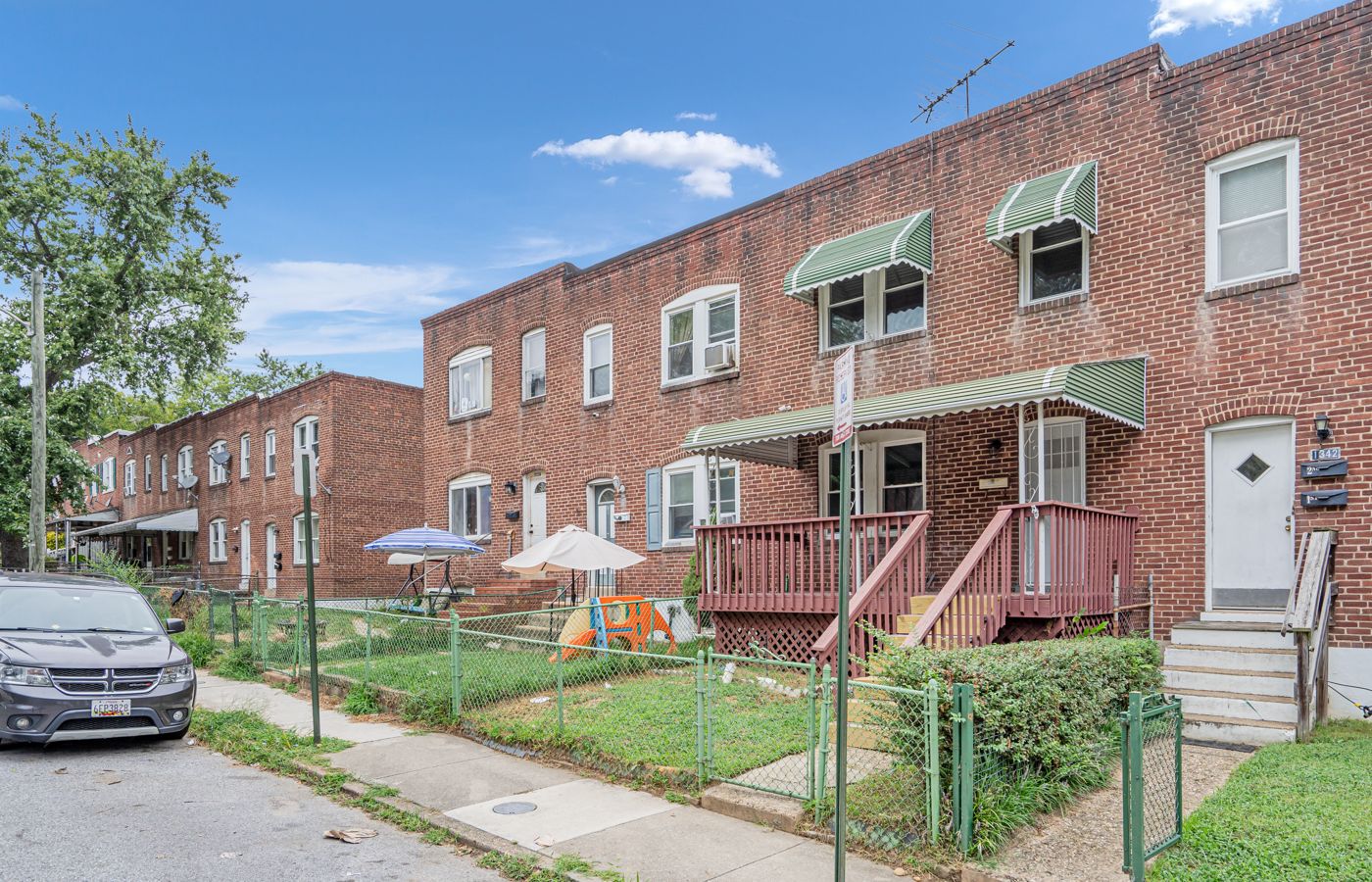
If you rent out a Maryland home built before 1978, the state’s lead law applies to you no matter how much the house has been renovated. You have to register each unit with the Maryland Department of the Environment and renew every year by December 31, get a passing lead inspection certificate before every new tenant moves in, and give tenants the required lead notices. The one way out is a lead-free certificate, which ends the yearly registration and turnover inspections.
We handle MDE registrations and turnover inspections for the homes we manage at SW Property Management, and it’s the rule we see new landlords overlook. Here’s how it works as of October 2026.
Which rentals are covered
Maryland’s lead law is Title 6, Subtitle 8 of the Environment Article, enacted in 1994. According to MDE’s rental property owner FAQ:
- Compliance is mandatory for residential rental units built before 1978, regardless of renovation history.
- Federally assisted housing, including Section 8 units, must comply too, on top of any federal rules.
- In a building with both commercial and residential tenants, the residential portion must comply, which can mean making sure the exterior of the whole building has no defective paint.
- Hotels, motels and other seasonal or transient housing are exempt.
The law’s definition of “owner” is broad. It includes a property manager, leasing agent or anyone else who controls the property, not just the person on the deed.
Registration and annual renewal with MDE
Every pre-1978 rental unit has to be registered with MDE’s Rental Registry and renewed every year.
- The fee is $30 per unit, every year. A single-family rental is one unit. A building with three apartments pays $90.
- Renewal is due by December 31 each year.
- A change in ownership needs a new registration and tracking number, and the ownership on the registration must match state tax records exactly (MDE landlord page).
New owners who have never registered call MDE’s Rental Registry Division at 410-537-4199. Existing owners renew online. Local licensing is separate: Baltimore City, for example, won’t issue a rental license without current lead certification for each unit (see Baltimore City rental license).
Certificate types
| Certificate | When you get it | What it does |
|---|---|---|
| Full Risk Reduction | Before every change in tenancy | Shows the unit passed a visual check for defective paint and a lead dust test by an MDE-accredited inspector |
| Modified Risk Reduction | After lead hazard work following a notice of defect or a child’s elevated blood lead | Shows the treatments were done and the unit passed before tenants move back in |
| Limited Lead-Free | No lead paint inside, some outside, and the exterior is intact | Exempts the unit while valid; re-inspection every 2 years |
| Lead-Free | No lead paint found, or all of it abated | Exempts the unit from annual registration fees and further risk reduction |
A unit qualifies as lead-free when testing shows lead below 0.7 mg/cm² by instrument or below 0.5% by weight in paint chip samples, per MDE. Submitting a lead-free or limited lead-free certificate comes with a $10 per unit processing fee. Lead-free units are still subject to federal lead disclosure requirements.
Turnover inspections
Before every change in occupancy, the unit has to meet the Full Risk Reduction Standard. An MDE-accredited inspector does a visual inspection of the interior and exterior to confirm there’s no defective paint (chipping, peeling, flaking), then takes dust samples.
That means you can’t hand keys to a new tenant the day after the last one moves out unless the inspection is already passed. Build time for it into the turnover:
- Old tenant moves out.
- Paint touch-ups, repairs and a thorough cleaning, done with lead-safe work practices.
- Inspector does the visual check and dust wipes.
- Lab results come back, and the certificate is issued.
- New tenant moves in with a copy of the certificate.
A failed dust test means cleaning again and re-testing, so do the cleaning carefully the first time.
Notice to tenants
MDE requires owners to give tenants three things at the start of each new tenancy, and every two years after that for existing tenants:
- The “Notice of Tenant Rights”
- The EPA brochure “Protect Your Family From Lead in Your Home”
- A copy of the current lead inspection certificate
Keep signed acknowledgments in the lease file.
When a tenant reports a problem
If you receive written notice from a tenant (or anyone else) that there’s defective paint in the unit, MDE says you have 30 days to either permanently relocate the tenants to a unit that is lead-free or meets the Full Risk Reduction Standard, or temporarily relocate them while an MDE-accredited contractor does the lead hazard reduction work. After the work, the unit needs a passing Modified Risk Reduction certificate before the tenants move back.
The same 30-day clock applies when you’re told that a person at risk (a pregnant woman or a child under 6) has a blood lead level of 5 micrograms per deciliter or more and an environmental investigation found defects.
Costs and accredited inspectors
What the state charges is fixed, as of October 2026. Inspections and lead work are private prices.
| Item | Cost |
|---|---|
| MDE registration, pre-1978 unit | $30 per unit per year |
| Lead-free or limited lead-free certificate processing | $10 per unit, one time |
| Full Risk Reduction inspection | Set by the MDE-accredited inspector |
| Lead hazard reduction or abatement | Set by the accredited contractor |
MDE publishes a list of accredited inspectors linked from its FAQ. Some inspectors are licensed for both home inspections and lead inspections; Baltimore County notes that one inspector can do both required inspections for a pre-1978 rental if they hold both credentials. Ask when you call.
Renovation work and the EPA RRP rule
Maryland’s law covers inspections and certificates. The federal Renovation, Repair and Painting (RRP) rule covers the work itself. EPA says anyone paid to do work that disturbs paint in housing built before 1978 must be certified in lead-safe work practices, including sole proprietors, and that a landlord or property management company must comply with the RRP rule when work disturbs paint in a pre-1978 rental.
Practically, that means:
- Hire a firm that is EPA lead-safe certified for any paint-disturbing repair, and ask for the certificate.
- If you or your own employees do the work, the certification rules apply to you, too.
- Lead hazard reduction ordered after a notice of defect has to be done by an MDE-accredited contractor.
Our maintenance work is done by Monarch Bay Renovations (MHIC #149066). Whoever does the work on your house, ask for their lead certifications before they start.
Affiliated business disclosure: Monarch Bay Renovations is owned by Stephen Wilson, team lead of The Wilson Home Team of Samson Properties. You are not required to use Monarch Bay Renovations for any service.
Liability
MDE can order compliance and assess civil penalties against owners who don’t follow the law. MDE also notes that noncompliance can be used by a tenant’s attorney to establish a negligence claim against the owner. That second point is the one that should keep owners current on registration, notices and turnover certificates. The paperwork is cheap compared to defending a claim.
This is general information, not legal advice. If you’ve received a notice of defect or a claim, talk to a Maryland attorney who handles lead cases.
Bottom line
Built before 1978? Register every unit with MDE, renew by December 31, and get a Full Risk Reduction certificate before every new tenant. Hand out the tenant notices at move-in and every two years. Respond to a notice of defect within 30 days. Use certified, accredited people for any work that disturbs paint. Or get a lead-free certificate and be done with the yearly cycle.
If you want a manager that already handles MDE renewals and turnover inspections, see SW Property Management, or get a free rent analysis first. For the rest of the rules, our Maryland landlord-tenant rules guide is the summary.
Sources
All checked October 26, 2026.
- Maryland Department of the Environment, Rental Property Owner FAQ
- Maryland Department of the Environment, Lead Registration for Landlords
- U.S. EPA, Lead Renovation, Repair and Painting Program
- Baltimore County, Register or Renew Your Rental Property
- Baltimore City DHCD, Property Registration and Rental Licensing